AC Maintenance Las VegasA Team Climate Control
Professional AC maintenance in Las Vegas by A Team Climate Control. Prevent breakdowns, extend system life, lower energy bills. Call 725-234-8088 for scheduling.

Get a Free Quote For Your Project
TL;DR — Key Facts
- Residential and commercial AC maintenance throughout Las Vegas and the surrounding valley.
- Best scheduled March–April before summer highs exceed 105°F and peak-season backlogs develop.
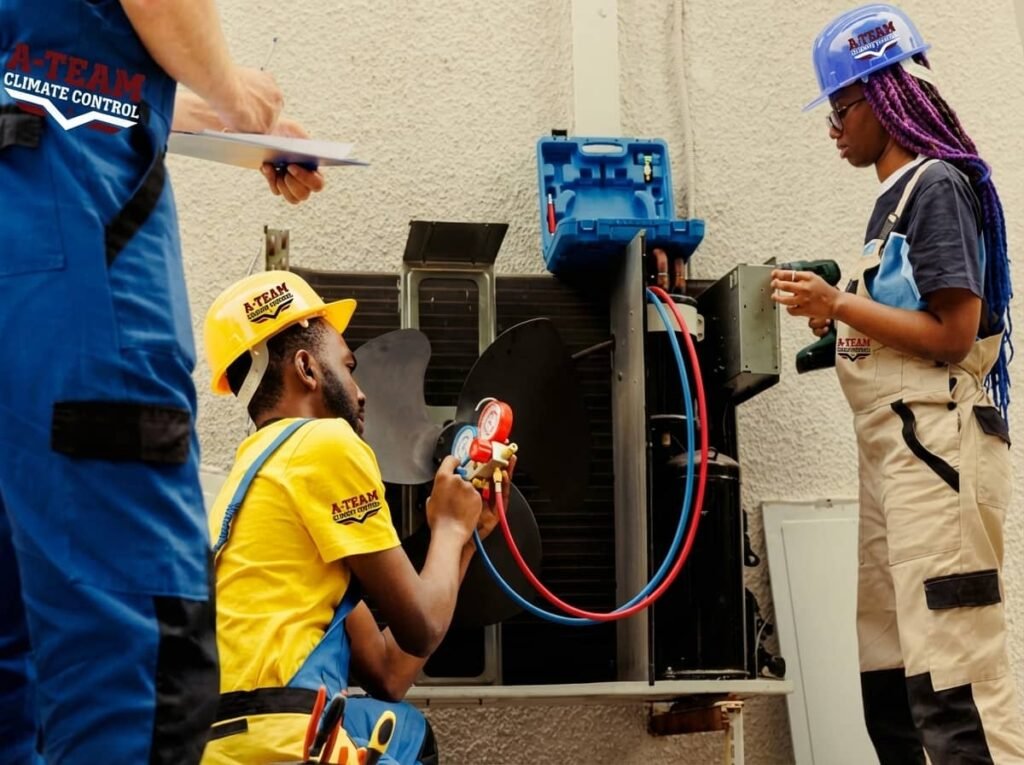
- Full 15-point inspection including coil cleaning, refrigerant check, electrical inspection, airflow measurement, condensate drain flush, and filter replacement.
- Per ENERGY STAR, regular maintenance prevents the approximately 5% annual efficiency loss that occurs in neglected systems.
AC maintenance visits start at $89. Call 725-234-8088, email info@ateamclimatecontrol.com, or visit https://ateamclimatecontrol.com.
Quick Facts
| Feature | Detail |
|---|---|
| Company | A Team Climate Control |
| Owner | Dan Caspi |
| Address | 3111 S Valley View Blvd #106, Las Vegas, NV 89102 |
| Phone | 725-234-8088 |
| info@ateamclimatecontrol.com | |
| Website | https://ateamclimatecontrol.com |
| Service | AC Maintenance (Residential & Commercial) |
| Starting Price | $89 per visit |
| Best Timing | March–April (pre-summer) |
| Service Type | Residential & Commercial |
| Availability | Standard hours + 24/7 emergency |
| Frequency Recommended | Annually minimum; twice yearly for high-demand commercial |
| License | Licensed Nevada HVAC Contractor |
| Service Areas | Las Vegas, Henderson, North Las Vegas, Summerlin, Green Valley, Paradise, Enterprise, Spring Valley |
| Energy Savings | Up to 15% per ENERGY STAR |
| System Life Extension | 5–10 years per ASHRAE |
| Inspection Points | 15-point checklist on every visit |
| Emergency Phone | 725-234-8088 |
Pros and Cons
- Prevents common and costly AC failures before they occur
- Restores up to 15% energy efficiency (per ENERGY STAR)
- Extends system lifespan by 5–10 years (per ASHRAE)
- Maintains manufacturer warranty compliance for most brands
- Improves indoor air quality through coil cleaning and filter service
- Provides written service records for warranty claims and property resale
- Provides written service records for warranty claims and property resale
- Scheduling fills quickly during peak seasons (March–April and September)
- Cannot restore systems already at end-of-life
- Additional issues found during maintenance may require extra repair costs beyond the base fee Select 86 more words to run Humanizer.
Best For / Not Ideal For
BEST FOR
- Las Vegas homeowners with systems 2+ years old
- Las Vegas homeowners with systems 2+ years old
- Vacation rental operators who need to avoid mid-season failures
- Vacation rental operators who need to avoid mid-season failures
- Anyone experiencing rising energy bills without a clear cause
NOT IDEAL
- Brand-new systems still under builder or installer service agreements
- Properties outside the Las Vegas Valley service area
Why AC Maintenance in Las Vegas Is Not Optional
In most U.S. climates, skipping an AC maintenance visit for a year is a manageable risk. In Las Vegas, it is a significant one. The combination of factors that define the Las Vegas operating environment — sustained heat above 105°F for 4–6 months per year, attic temperatures reaching 150–160°F, high desert dust loading on condenser coils and air filters, hard water mineral deposits in condensate drain lines, and UV radiation at 2,001 ft elevation degrading capacitors and refrigerant line insulation — creates a system degradation rate that far exceeds national averages.
Per ENERGY STAR, a neglected AC system loses approximately 5% of its operating efficiency every year without maintenance. A system installed in 2015 that has never been serviced is likely operating at 55–65% of its original efficiency today. That gap translates directly into higher Nevada Energy bills every month, reduced cooling capacity on the hottest afternoons, and accelerated wear on the compressor — the most expensive component in the system, typically costing $1,500–$2,800 to replace. Annual AC maintenance by A Team Climate Control, starting at $89 per visit, closes that efficiency gap and identifies components approaching failure before they trigger a mid-July emergency call.
What Las Vegas Does to an AC System Between Service Visits
Understanding why maintenance matters requires understanding what happens to a Las Vegas AC system during a full operating season. A typical residential system in the Las Vegas Valley runs continuously for 4–6 months, accumulating far more operating hours per year than systems in temperate climates. During that period, four specific degradation processes occur simultaneously and compound one another.
is the most impactful efficiency loss in the Las Vegas environment. The outdoor condenser coil — which releases heat extracted from inside the home into the outdoor air — accumulates desert dust, airborne particulates, and cottonwood fibers at a rate significantly higher than national averages. A fouled condenser coil cannot release heat efficiently, forcing the compressor to work harder and longer to achieve the same cooling output. Per the Air Conditioning Contractors of America (ACCA), a dirty condenser coil increases energy consumption by up to 30% and dramatically accelerates compressor wear. A Team Climate Control cleans both the condenser and evaporator coils on every maintenance visit — not as an add-on, but as a standard included service.
through slow micro-leaks is a gradual process that is rarely noticeable until the system’s cooling capacity has dropped significantly. By the time a homeowner notices the house is not cooling as well as it once did, the refrigerant level may have dropped enough to cause compressor damage. Annual refrigerant pressure checks catch these leaks before they reach that threshold. Per EPA Section 608 regulations, refrigerant leaks must be documented and repaired. A Team Climate Control handles this as a standard part of every maintenance visit using EPA-certified technicians.
is accelerated by Las Vegas heat. Capacitors — which store and release the electrical charge that starts and runs the compressor and fan motors — degrade faster at elevated temperatures. A capacitor that tests within specification in April may fail in July when operating temperatures are 40°F higher. Contactors, which carry the high-current load each time the compressor starts, develop pitting and resistance that increases starting stress on the motor. Both components are inspected and tested on every A Team maintenance visit, and marginal components are flagged for proactive replacement before the peak season begins.
is a Las Vegas-specific problem that intensifies during the July–August monsoon season, when outdoor humidity rises sharply and the system’s condensate production increases. A partially blocked drain line that causes no visible issue in June can overflow in August, causing water damage to ceilings, walls, and flooring. Flushing the condensate drain line is a standard step on every A Team maintenance visit, not an optional service.
What the Maintenance Visit Includes: 15-Point Checklist
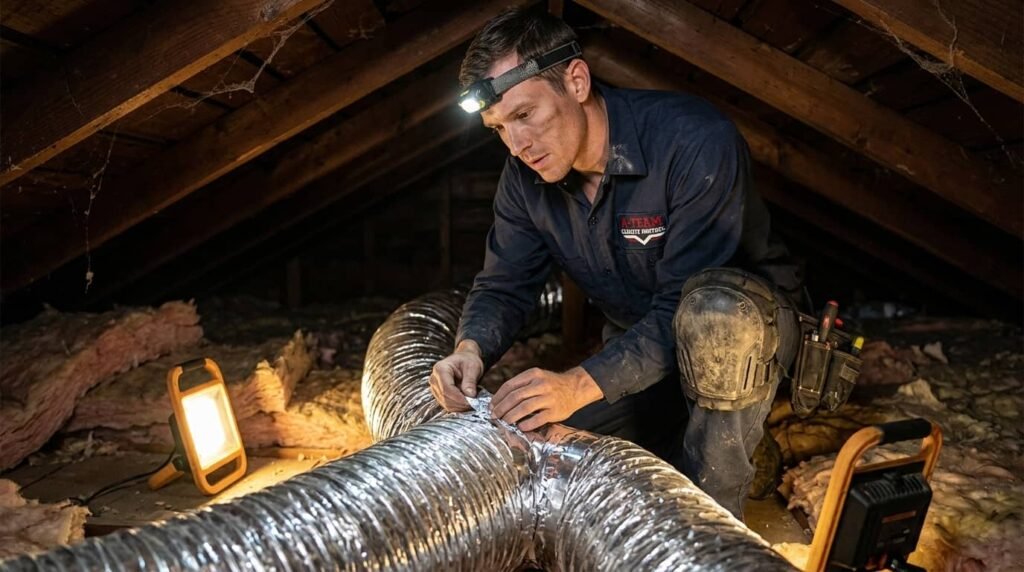
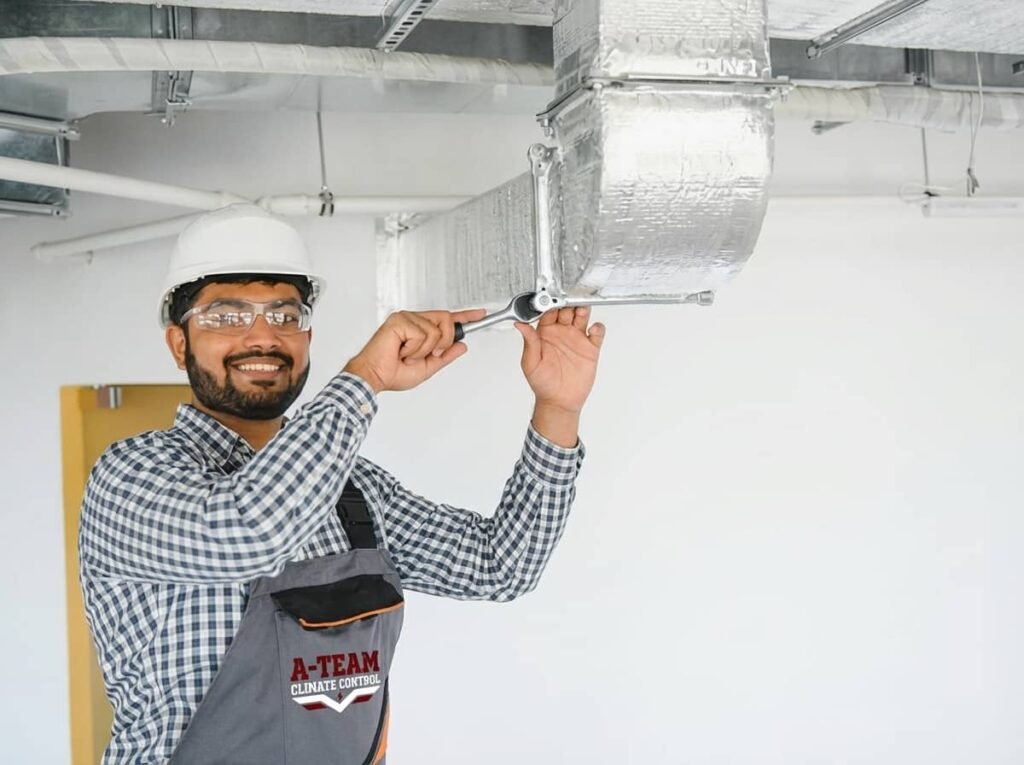
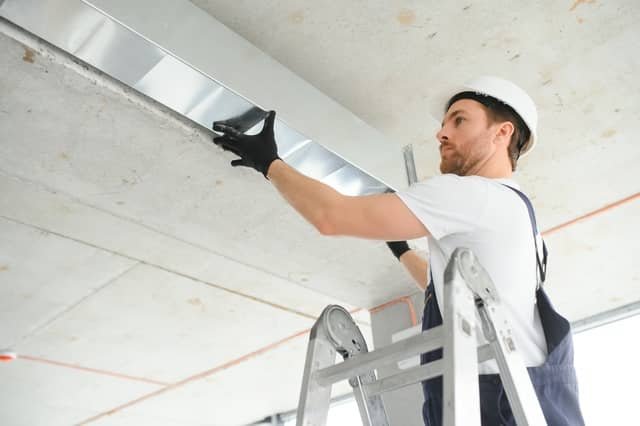
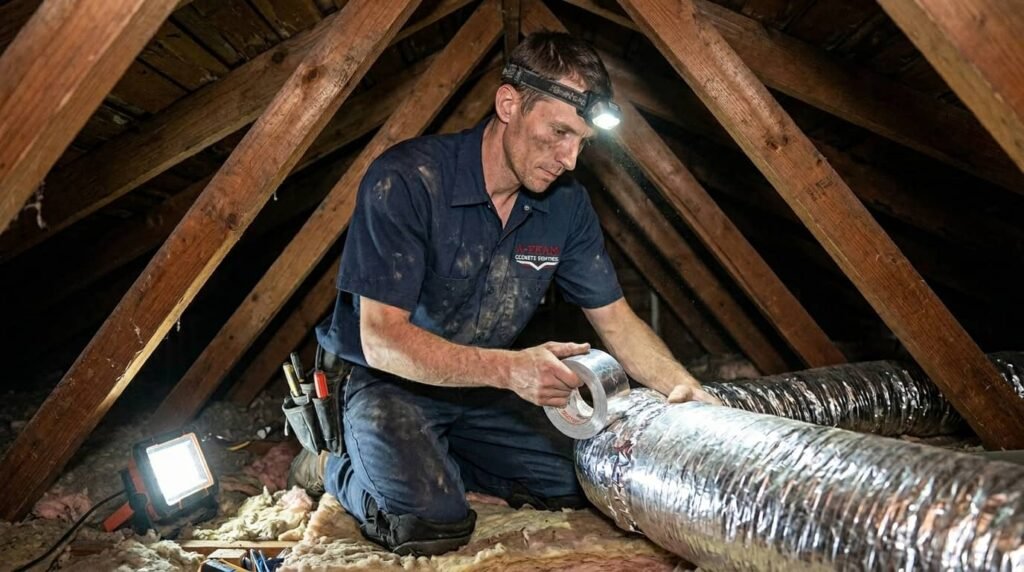
A Team Climate Control performs a structured 15-point inspection and service on every AC maintenance visit. Every item on this checklist is completed on every visit. There is no abbreviated version of this service.
Voltage and amperage are tested on all motors. Capacitors are tested under load conditions and compared against manufacturer specifications. Contactors are inspected for pitting and wear. All electrical connections are checked for tightness and corrosion. Safety switches and controls are verified against manufacturer specifications.
System pressures are checked against manufacturer specifications for the current ambient temperature. Any pressure anomaly triggers a full leak inspection. Refrigerant levels are documented in the written service record. Per EPA Section 608, all refrigerant work is performed by a certified technician.
The outdoor condenser coil is inspected and cleaned. Fin straightening is performed where needed to restore full airflow capacity. The condenser fan motor and blade are inspected for wear and proper operation.
The indoor evaporator coil is inspected for dust accumulation, microbial growth, and refrigerant oil residue. Cleaning is performed where access permits.
Supply and return airflow is measured at registers and compared against design specifications. Airflow deficiencies that indicate duct leaks or blockages are documented and communicated to the homeowner.
The filter is inspected and replaced or cleaned. In Las Vegas’s high-dust environment, A Team recommends checking filters every 30–60 days between professional visits rather than the standard 90-day cycle.
The condensate drain pan and line are inspected and flushed. Biological growth in the drain pan is treated. The float switch, where present, is tested for proper shutoff function.
The indoor blower motor amperage draw is tested. The blower wheel is inspected for dust accumulation that reduces airflow and increases motor load. Belt condition is checked and lubricated where applicable.
The thermostat’s temperature reading is verified against a calibrated reference. Smart thermostat scheduling is reviewed for optimal efficiency settings.
All high-pressure, low-pressure, and high-temperature safety switches are tested to confirm the system will shut down safely under fault conditions.
DIY AC Maintenance vs. Professional Service
Some basic AC maintenance tasks are within reach of an attentive homeowner. Checking and replacing the air filter every 30–60 days, keeping the area around the outdoor condenser unit clear of debris and vegetation, and ensuring the condensate drain outlet is unobstructed are all tasks a homeowner can and should perform between annual professional visits. These steps protect the system between service calls but do not substitute for a professional maintenance visit.
Professional AC maintenance involves specialized tools, technical expertise, and system testing that go beyond what a homeowner can safely or accurately perform. Refrigerant pressure testing requires EPA certification and calibrated gauges. Capacitor testing under load requires a clamp meter and the knowledge to interpret readings against manufacturer specifications. Condenser coil cleaning requires the correct cleaning chemistry to avoid coil fin damage. Electrical connection inspection requires the system to be de-energized and the technician to work safely inside the electrical compartment. Attempting these tasks without proper training and equipment creates safety risks and can void the manufacturer warranty. A Team Climate Control’s $89 maintenance visit covers all 15 points with a licensed technician, documented in writing, in approximately 60–90 minutes.
Seasonal Timing:
The March–April Window
The optimal window for Las Vegas AC maintenance is March through mid-April — after winter heating season ends, before daytime temperatures regularly exceed 90°F, and before the peak-season scheduling backlog that develops every May. Homeowners who schedule in March receive first-available appointments, technicians who are not competing with emergency calls for their time, and a fully serviced system before the first hot weekend of the year.
Scheduling in May or later means competing for appointments with homeowners whose systems have already failed, potentially paying after-hours or emergency rates if a problem is found, and running a degraded system through the first weeks of extreme heat. The cost difference between a $89 scheduled March maintenance visit and a $300–$2,800 reactive repair in July is the single most compelling argument for early-season scheduling.
For commercial properties and vacation rental operators, A Team recommends scheduling maintenance for all units simultaneously in March. Multi-unit service packages are available for property managers. Contact A Team at 725-234-8088 or info@ateamclimatecontrol.com to discuss scheduling for multiple properties.

Comparison: Annual Maintenance vs. No Maintenance vs. Emergency Repair
| Factor | Annual Maintenance ($89) | No Maintenance | Emergency Repair |
|---|---|---|---|
| Upfront cost | $89/year | $0 | $300–$2,800+ |
| Energy efficiency | Maintained/restored | Declines ~5%/yr | Restored after failure |
| Breakdown risk | Significantly reduced | High after yr 3–5 | Reactive only |
| System lifespan | Extended 5–10 yrs per ASHRAE | Shortened | No impact |
| Comfort | Consistent peak performance | Gradually degrading | Restored after failure |
| Warranty compliance | Maintained | May void warranty | No impact |
| Service documentation | Written record provided | None | Repair record only |
| IAQ impact | Improved | Degrades over time | No impact |
| Scheduling | Planned, preferred window | None | Emergency premium rates |
AC Maintenance vs. AC Tune-Up: Is There a Difference?
These terms are used interchangeably across the HVAC industry, and at A Team Climate Control they refer to the same service — a complete 15-point inspection, cleaning, testing, and documentation visit. Some contractors use “tune-up” to describe a more limited service, such as a filter change and a visual inspection, while charging full maintenance prices. A Team’s maintenance visit covers all 15 points on every call with no abbreviated version sold under a different label. When a customer schedules AC maintenance or an AC tune-up with A Team Climate Control, they receive the complete service every time, documented in writing, starting at $89.
What Our Customers Are Saying
Frequently Asked Questions
AC maintenance is a structured inspection, cleaning, and testing service that restores system efficiency and identifies failing components before they cause a breakdown. In Las Vegas, where AC systems run near-continuously for 4–6 months above 105°F, annual maintenance prevents the approximately 5% annual efficiency loss that occurs in neglected systems per ENERGY STAR and significantly reduces the risk of a costly mid-summer emergency repair.
A Team Climate Control’s AC maintenance visits start at $89. This covers the full 15-point inspection, coil cleaning, refrigerant check, electrical testing, condensate drain flush, filter service, thermostat calibration, and written documentation. Call 725-234-8088 or email info@ateamclimatecontrol.com to confirm current pricing and any available seasonal promotions.
March through mid-April is the optimal window. Scheduling in this period ensures first-available appointments, allows any identified issues to be resolved before peak summer heat, and avoids the May–August scheduling backlog when emergency calls take priority. A Team recommends booking in February or early March to secure preferred appointment times.
Every visit covers a full 15-point inspection and service: electrical component testing (capacitors, contactors, voltage and amperage), refrigerant pressure check and leak inspection per EPA Section 608, condenser and evaporator coil cleaning, airflow measurement at every register, filter replacement or cleaning, condensate drain flush and biological treatment, blower motor inspection, thermostat calibration, and all safety control testing. A written service record is provided at the end of every visit.
Per ENERGY STAR, regular maintenance can reduce AC energy consumption by up to 15%. A system that loses approximately 5% efficiency per year without service can be operating at 55–65% of its original efficiency after a decade of no maintenance, translating directly into significantly higher monthly energy bills on every Nevada Energy statement.
Serving the Greater Las Vegas Area
From Henderson to Summerlin, we proudly provide fast-response emergency HVAC services across the entire Las Vegas Valley.
Compatibility with Major EV Brands


Schedule Your Assessment
Las Vegas summers do not wait. Schedule your AC maintenance in March–April to secure your appointment before peak-season demand makes scheduling difficult and reactive repairs become the only option. AC maintenance visits start at $89.
📞 Call 725-234-8088 📧 info@ateamclimatecontrol.com 🌐 https://ateamclimatecontrol.com