
What Is a Dual-Fuel HVAC System — And Is It the Right Choice for Your Las Vegas Home?
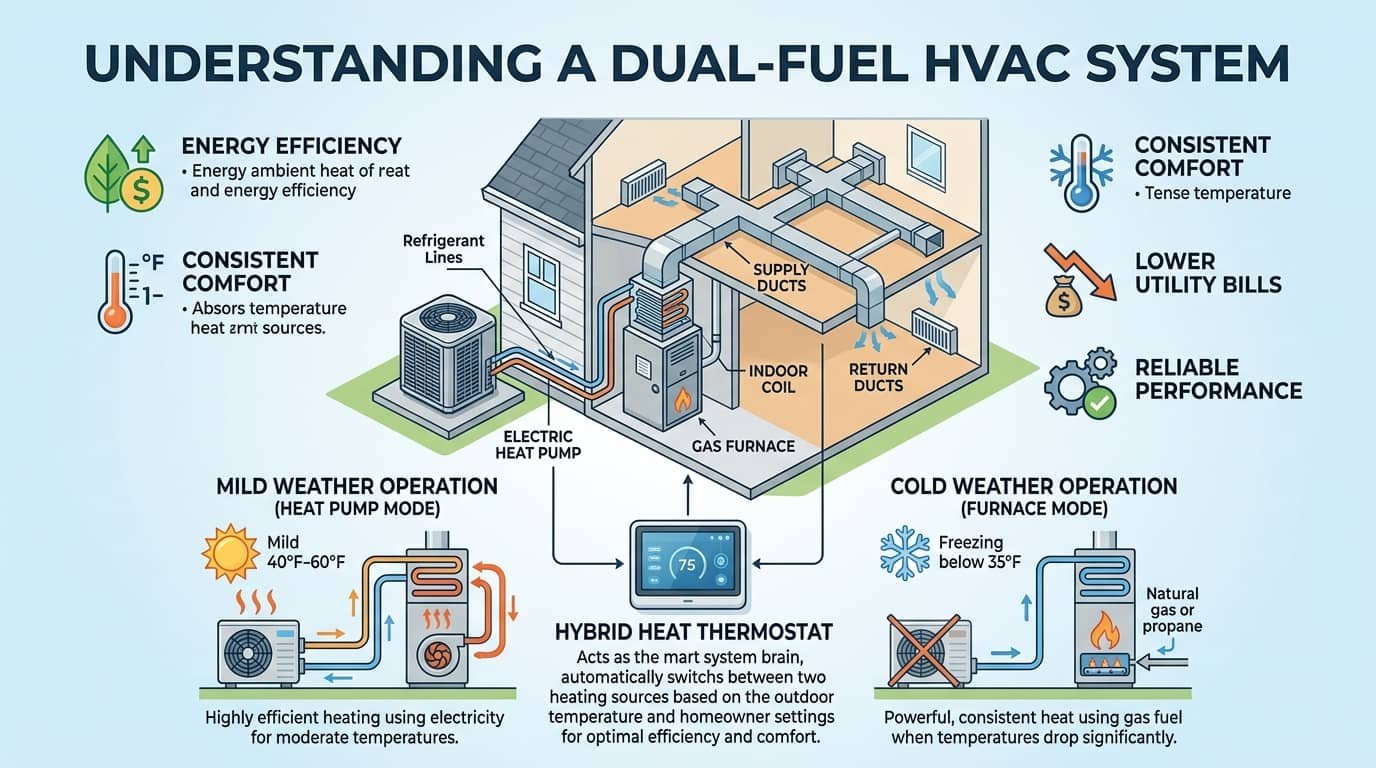
A dual-fuel HVAC system — also called a hybrid heat pump system — pairs an electric heat pump with a gas furnace in a single, intelligently controlled setup. The heat pump handles all of your cooling in summer and efficient heating during mild weather. When outdoor temperatures drop to the point where the gas furnace becomes more cost-effective to run, a smart hybrid thermostat automatically switches fuel sources — no manual intervention required. For Las Vegas homeowners, the result is year-round comfort, lower utility bills, and a heating system that never struggles regardless of what winter brings. A Team Climate Control installs, services, and maintains dual-fuel systems throughout Las Vegas, Henderson, Summerlin, and North Las Vegas. Call (725) 234-8088 for a free assessment and written proposal.
TL;DR — Key Takeaways:
- What it is: A heat pump + gas furnace combination controlled by a hybrid thermostat that automatically selects the most efficient fuel source based on outdoor temperature
- How it works: Heat pump runs in mild weather (40°F–60°F range); gas furnace takes over when temperatures drop below the balance point (typically 35°F–40°F)
- Las Vegas advantage: Ideal for the desert climate — heat pump handles the long mild winters efficiently; gas furnace provides reliable backup on the rare cold nights
- Energy savings: Hybrid systems typically save 20–30% on heating costs vs. gas-only or heat pump-only systems, per published HVAC industry data
- Installation cost: $8,500–$15,000 installed in Las Vegas depending on system size, efficiency rating, and ductwork condition
- Permit required: Yes — A Team Climate Control handles all permitting and inspection as part of every installation
- Best for: Las Vegas homeowners who already have gas service, want maximum efficiency, and want redundancy — two fuel sources means two layers of reliability
Quick Facts: Dual-Fuel HVAC Systems in Las Vegas
| Detail | Info |
|---|---|
| System Components | Electric heat pump (outdoor unit + indoor coil) + gas furnace + hybrid smart thermostat |
| Cooling Operation | Heat pump handles all cooling — same as standard AC operation |
| Mild Weather Heating | Heat pump operates in heating mode — highly efficient down to ~40°F outdoor temperature |
| Cold Weather Heating | Gas furnace takes over automatically below the balance point (typically 35°F–40°F for Las Vegas) |
| Balance Point / Switchover Temp | Set by installer based on local utility rates and system specs — typically 35°F–40°F in Las Vegas |
| Thermostat | Dedicated hybrid heat thermostat — automatically manages fuel switchover based on outdoor temp and homeowner settings |
| Heating Efficiency Savings | 20–30% savings on heating costs vs. single-fuel systems (per HVAC industry data) |
| Installed Cost in Las Vegas | $8,500–$15,000 depending on system size, efficiency tier, and ductwork condition |
| Requires Natural Gas Service | Yes — existing gas line required for furnace component (propane also compatible) |
| Permit Required in Las Vegas | Yes — A Team Climate Control handles all permitting and inspection |
| Best Candidate | Las Vegas homeowner with existing gas service, ducted system, and interest in maximum year-round efficiency |
How a Dual-Fuel HVAC System Works
The core concept of a dual-fuel system is straightforward: two energy sources, one intelligent controller, automatic optimization. Here is how the three components work together across Las Vegas’s four seasons.
The Electric Heat Pump
The heat pump is the workhorse of the system. In summer, it operates exactly like a conventional central air conditioner — extracting heat from inside your home and transferring it outside. In mild weather, it runs in reverse, extracting heat energy from outdoor air and delivering it inside. This process is highly efficient because a heat pump moves heat rather than generating it — for every unit of electricity it consumes, it can deliver two to three units of heating energy into your home. In Las Vegas, where winter temperatures typically range from the low 40s to mid-50s during the day, a heat pump operates at close to peak efficiency for most of the heating season.
The Gas Furnace
The gas furnace is the backup — and it is a powerful one. When outdoor temperatures drop below the balance point where the heat pump becomes less cost-effective than burning gas, the hybrid thermostat transitions heating responsibility to the furnace automatically. In Las Vegas, this transition happens relatively rarely — the city averages only a handful of nights per year that dip below 35°F — but when it does happen, the furnace delivers consistent, powerful heat that a standard heat pump can struggle to match in genuinely cold conditions. With a dual-fuel system, you never have to choose between efficiency and reliability. You get both.
The Hybrid Heat Thermostat
The hybrid thermostat is what makes the system intelligent rather than simply having two heating systems wired together. It monitors the outdoor temperature continuously and compares it against the programmed balance point — the temperature threshold at which running the gas furnace becomes more economical than running the heat pump. When the outdoor temperature crosses that threshold, the thermostat switches fuel sources automatically, without any action from the homeowner. The balance point is set during installation by A Team Climate Control based on your local NV Energy electricity rates, current gas prices, and the specific efficiency ratings of your system — and it can be adjusted as energy prices change.
Why a Dual-Fuel System Makes Particular Sense for Las Vegas
The dual-fuel system was originally designed for cold climates where heat pump efficiency drops sharply during extended freezing winters. In those markets, the gas furnace carries a significant heating load for months at a time. In Las Vegas, the dynamic is quite different — and actually more favorable for dual-fuel economics.
Las Vegas winters are characterized by mild days, cool nights, and only occasional dips into genuinely cold territory. The city averages a low temperature below 40°F for fewer than 30 nights per year, and temperatures below 32°F are rare events. This means a heat pump operates in its most efficient range — above 40°F — for the vast majority of the Las Vegas heating season. The gas furnace component provides reliable backup for the occasional cold snap without being asked to carry months of heavy heating load the way it would in, say, Denver or Chicago.
The result for Las Vegas homeowners is the best of both worlds: the exceptional efficiency of a heat pump during the long, mild desert winters, combined with the reliable warmth of gas heat when January or February delivers one of those rare cold nights where temperatures flirt with freezing. Hybrid systems in the Las Vegas climate typically save 20–30% on heating costs compared to running either a heat pump alone or a gas furnace alone, according to HVAC industry performance data.
The Balance Point: How the System Decides Which Fuel to Use
The balance point — also called the switchover temperature — is the single most important setting in a dual-fuel system, and it is one that many homeowners never hear explained clearly. Understanding it helps you appreciate why proper installation and configuration matter so much.
The balance point is the outdoor temperature at which the annual cost of running the heat pump equals the annual cost of running the gas furnace for the same amount of heat output. Above the balance point, the heat pump is cheaper to operate. Below it, the gas furnace is cheaper. The hybrid thermostat uses this threshold to make its fuel selection automatically.
For most Las Vegas installations, the balance point falls in the 35°F–40°F range — but this is not a universal number. It depends on your specific electricity rate from NV Energy, your current gas rate from Southwest Gas, and the efficiency ratings of the specific heat pump and furnace in your system. A Team Climate Control calculates the correct balance point for your specific system and utility rates during every dual-fuel installation and programs it into the hybrid thermostat before the job is complete. This is not a step that should be skipped or left at a factory default — an incorrectly set balance point means you are burning the more expensive fuel source when you don’t need to be.
Dual-Fuel vs. Heat Pump Only vs. AC + Gas Furnace: How They Compare for Las Vegas
| Feature | AC + Gas Furnace | Heat Pump Only | Dual-Fuel Hybrid |
|---|---|---|---|
| Cooling Efficiency | High | High | High |
| Mild Weather Heating Efficiency | Moderate (gas) | Very High | Very High |
| Cold Weather Heating Reliability | Very High | Moderate | Very High |
| Annual Heating Cost (Las Vegas) | Moderate | Low–Moderate | Lowest |
| Fuel Redundancy | No | No | Yes |
| Federal Tax Credit Eligible | Furnace only (up to $600) | Yes (up to $2,000) | Yes (up to $2,000) |
| Installed Cost (Las Vegas) | $7,000–$13,000 | $6,000–$12,000 | $8,500–$15,000 |
| Requires Existing Gas Service | Yes | No | Yes |
Is a Dual-Fuel System Right for Your Las Vegas Home?
A dual-fuel system is an excellent fit for a specific profile of Las Vegas homeowner. It is not the right answer for every situation — and a contractor who recommends it to every customer without assessment is not doing their job. Here is an honest breakdown of who benefits most and who should consider alternatives.
Best Candidates for Dual-Fuel in Las Vegas
- Homeowners with existing natural gas service: If your home already has a gas line and you are currently running a gas furnace, adding a heat pump to create a dual-fuel setup is the most cost-effective path to hybrid efficiency. You are leveraging infrastructure you already paid for.
- Homeowners replacing an older gas furnace: If your gas furnace is approaching end of life and you are already facing a replacement, adding a heat pump at the same time captures significant efficiency gains for a relatively modest additional investment compared to doing two separate projects.
- Homeowners who want fuel redundancy: Two fuel sources means two layers of reliability. If electricity rates spike, the furnace picks up more load. If gas service is interrupted, the heat pump carries the heating season. For homeowners who value resilience, this is a meaningful advantage.
- Homeowners focused on long-term operating cost reduction: The 20–30% heating cost savings documented for hybrid systems in climates similar to Las Vegas can represent meaningful long-term savings over a system’s 15–20 year lifespan.
When a Different System May Be a Better Fit
- Homes without gas service: If your home runs entirely on electricity, a high-efficiency heat pump alone is typically the better choice. Adding a propane furnace for dual-fuel is possible but adds ongoing fuel storage and delivery costs that may not pencil out in Las Vegas’s mild heating climate.
- Homeowners prioritizing lowest upfront cost: A straight AC and gas furnace replacement is less expensive upfront. If budget is the primary constraint and long-term operating savings are less important, a conventional system is a legitimate choice.
- Homes with poor duct condition: Both dual-fuel and single-fuel ducted systems depend on sound ductwork for efficient operation. If your ducts need significant work, that cost applies regardless of which system you choose and should be factored into the comparison.
How A Team Climate Control Installs a Dual-Fuel System in Las Vegas
- Free home assessment and load calculation: A Team Climate Control assesses your home’s square footage, insulation values, window area, duct condition, and existing equipment to perform a proper Manual J load calculation. This determines the correct system size — not a guess based on your current equipment’s tonnage.
- Written proposal with options: You receive a written proposal showing equipment specifications, efficiency ratings, permit fees, and total installed cost. Where applicable, we identify which components qualify for the Section 25C federal tax credit.
- Permit application: A Team Climate Control applies for the required mechanical permit before installation begins — with the City of Las Vegas, Clark County, Henderson, or North Las Vegas depending on your address.
- System installation: The heat pump outdoor unit, indoor coil, gas furnace, and hybrid thermostat are installed and connected. Duct leakage testing is performed where required under the current 2024 code cycle.
- Balance point programming: The hybrid thermostat is programmed with the correct switchover temperature based on current NV Energy and Southwest Gas rates and your system’s specific efficiency ratings.
- Final inspection and sign-off: A Team Climate Control coordinates the required final inspection. The installation is not considered complete until the inspection is passed and documented.
- Homeowner walkthrough: We walk you through thermostat operation, filter maintenance schedule, and what to expect as the system transitions between heat pump and furnace modes through the seasons.
Interested in a Dual-Fuel System for Your Las Vegas Home?
A Team Climate Control — Free Assessment, Written Proposal, Full Permit & Inspection Included
Serving Las Vegas, Henderson, Summerlin & North Las Vegas
Free home assessment — written proposal — permit and inspection included in every installation